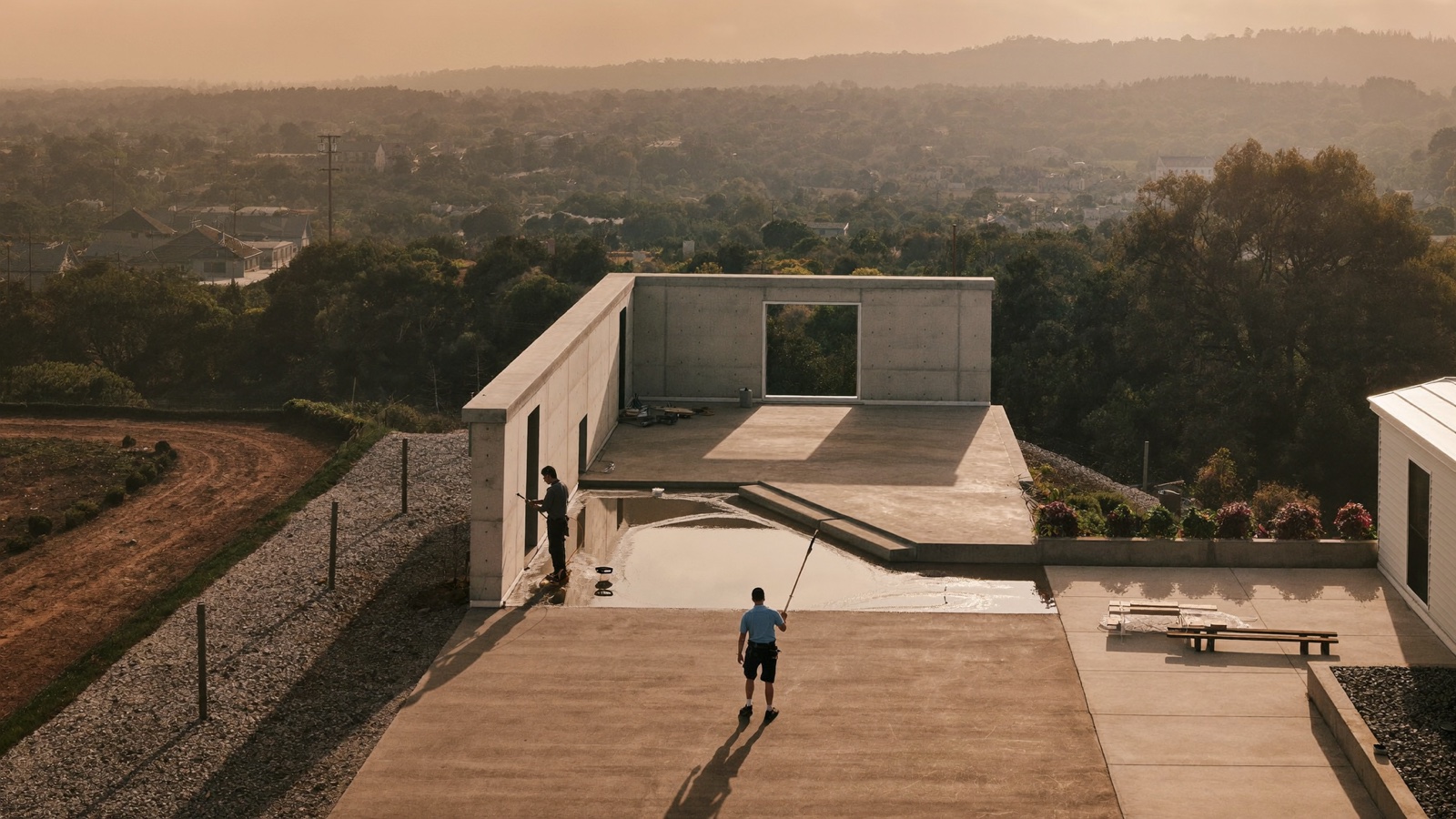
If your driveway or patio pour got moved in the middle of July, the smoke is the reason. Concrete crews across Erie County stopped outdoor work during the air quality emergency, and moving those dates was the correct call rather than a convenient excuse.
A slab that gets placed on a bad day stays bad for thirty years. A slab that gets placed four days late is simply four days late.
What Happened Over Western New York
Smoke from wildfires burning in Ontario settled over the region during the week of July 13. Buffalo air quality climbed into the unhealthy range on Wednesday and reached the very unhealthy category on Thursday, July 16.
The state Department of Environmental Conservation and Department of Health issued advisories for the region, and Erie County Executive Mark Poloncarz publicly told outdoor workers to head home that morning. News 4 Buffalo reported on how the region responded.
Conditions blew through by Friday. Every contractor in the metro area spent the following week rebuilding a calendar.
Why a Crew Cannot Just Push Through It
Finishing concrete is not standing around. It is hours of bent over screeding, floating, and troweling at a pace set by the mix, not by the worker.
Breathing rate under that kind of load is several times resting rate. An air quality index above 200 means healthy adults start feeling effects, and a finishing crew pulls far more of that air into their lungs than someone walking to a car.
There is also a quality problem. Nobody rushes a broom finish or a control joint layout well, and the temptation to rush is exactly what shows up as a crack line two winters later.
The Heat Is the Bigger Technical Issue
Smoke days are a safety stop. Heat is what actually changes how we mix, place, and cure a slab in a Buffalo July.
Hot air, direct sun, low humidity, and wind all pull water out of fresh concrete faster than the surface can bleed it back. That combination causes plastic shrinkage cracking, which appears within hours of placement and never goes away.
What Changes on a Hot Day
- Pours start at first light instead of mid morning
- Chilled water or ice replaces part of the batch water
- The subgrade and forms get dampened before the truck arrives
- Evaporation retarder goes on between finishing passes
- Wet curing or a curing compound goes down immediately, not at the end of the day
The widely used industry ceiling for fresh concrete placed in hot weather is 95 degrees Fahrenheit at the point of delivery. Above that, set time collapses and the finishing window closes before the crew can do the work properly.
How We Read Buffalo Summer Conditions
| Condition | Effect on the schedule |
|---|---|
| AQI 101 to 150 | Work continues with longer rotations and more breaks |
| AQI 151 to 200 | Placement postponed, prep and forming may continue |
| AQI above 200 | Site closed, all outdoor work stopped |
| Air temp above 85 with sun and wind | Dawn start, cooled mix, retarder on standby |
| Rain within 4 hours of placement | Pour moved, a rained on surface cannot be saved |
Prep work is the reason a smoke day does not always cost a full week. Demolition, excavation, grading, and forming can often be resequenced into the clear days on either side.
What This Means If You Are Waiting on a Quote
Late July through September is the strongest stretch of the year for concrete in Western New York. Ground temperatures are stable, overnight lows stay above 50, and slabs get a full cure before the first freeze.
That window is also finite. Anything poured after mid October in Buffalo needs blankets, accelerators, or a spring reschedule, and the lost days from July are now competing for the same fall slots.
If you have been putting off a driveway replacement or a backyard patio build, getting on the calendar now is worth more than it was three weeks ago.
Check Your Existing Concrete While You Are Out There
Heat and freeze cycles both attack the same weak points. Late summer is the easiest time of year to see what the last winter did to your surfaces.
Worth a Look
- Hairline map cracking on a slab surface, which usually points to fast drying during the original pour
- Spalling or flaking near the garage apron, often from de icing salt carried off vehicles
- Lifted or rocking sections along a front walk, which are a trip hazard and a liability question for a Buffalo homeowner
- Open joints that let water reach the base, where it will freeze and lift the slab in January
Small defects are a repair and resurfacing job right now. Ignored for two more winters, the same defects become a full tear out.
The same inspection applies to public facing walkways, where settlement tends to show up first and matters most.
Get on the Fall Calendar
We serve Buffalo, Cheektowaga, Amherst, Tonawanda, and the surrounding metro area, and we will tell you honestly whether your project fits this season or belongs in spring.
Call (716) 703-5672 or send us the details of your project for a written estimate with a real placement date on it.